
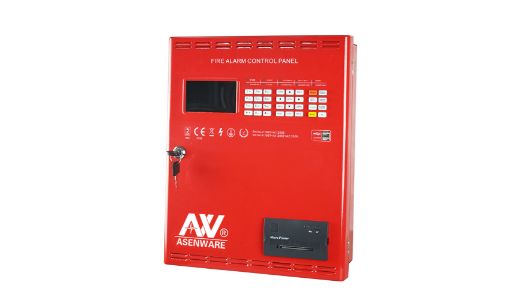
Addressable Fire Alarm Systems
- Addressable Smoke Detectors – Identify exact location of smoke, reducing false alarms.
- Addressable Heat Detectors – Trigger alarms based on temperature rise, ideal for kitchens and mechanical rooms.
- Addressable Manual Call Points – Allow manual activation with zone identification.
- Addressable Control Panels – Centralized monitoring, supports multiple loops and zones.
- Addressable Sounders & Strobes – Provide audible and visual evacuation signals.
Key Features:
- Precise Detection: Each device on the system is individually addressed, allowing for exact location identification of fire incidents.
- Integrated Communication: Devices communicate directly with the control panel, providing real-time status updates and diagnostics.
- Flexible Configuration: Supports a wide range of detectors and notification devices, adaptable to specific needs and building layouts.
- Advanced Monitoring: Allows for detailed monitoring and reporting of system performance and fire incidents.
- Ease of Maintenance: Provides diagnostic tools for easy troubleshooting and maintenance.
Components:
- Addressable Detectors: Smoke, heat, and multi-sensor detectors with unique addresses for precise identification and monitoring.
- Control Panel: Central unit that receives signals from addressable devices, manages system operations, and provides real-time alerts.
- Manual Call Points: Devices that allow occupants to manually trigger the alarm and provide immediate fire alerts.
- Notification Appliances: Includes sounders, strobes, and other devices to alert occupants and emergency services.
- Communication Modules: For integration with other building systems and remote monitoring capabilities.
Applications:
- Commercial Buildings: Offices, shopping malls, and public facilities where precise fire detection and management are critical.
- Industrial Facilities: Factories, warehouses, and production areas requiring advanced monitoring and control.
- High-Rise Buildings: Multi-story buildings where detailed zone management and accurate location identification are essential.
- Healthcare and Educational Facilities: Hospitals, schools, and universities needing reliable and detailed fire alarm systems.
Benefits:
- Accurate Fire Location: Provides exact location of fire incidents, facilitating faster response and targeted firefighting efforts.
- Enhanced Control: Offers advanced features such as real-time diagnostics, system status monitoring, and detailed reporting.
- Flexible Configuration: Adaptable to various building sizes and complexities, with a wide range of compatible devices.
- Improved Maintenance: Diagnostic tools and status updates simplify system maintenance and troubleshooting.
- Compliance: Meets stringent fire safety standards and regulations for comprehensive protection.
Considerations:
- System Complexity: Suitable for larger or more complex buildings where precise detection and management are required.
- Integration Needs: Ensure compatibility with existing building systems and other fire safety measures.
- Cost: Higher initial investment compared to conventional systems, but offers advanced features and benefits.
- Maintenance Requirements: Regular maintenance and system checks are essential to ensure optimal performance.
Reviews
There are no reviews yet.