Types of Conventional Fire Alarm Systems
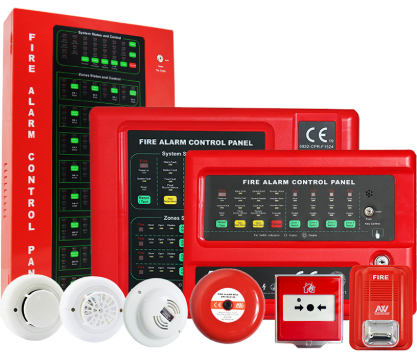
- Conventional Smoke Detectors – Detect smoke particles, connected to zones on the panel.
- Conventional Heat Detectors – Trigger alarms when temperature thresholds are exceeded.
- Conventional Manual Call Points – Allow manual activation of alarms.
- Conventional Control Panels – Zone-based monitoring, typically 2–32 zones.
- Conventional Sounders & Strobes – Provide audible and visual evacuation signals.
Key Features:
- Basic Detection: Utilizes conventional detectors and alarms to identify and signal the presence of smoke, heat, or fire.
- Zone-Based: Divides the building into distinct zones for precise location identification of fire incidents.
- Manual Activation: Includes manual call points for occupants to manually trigger the alarm in the event of a fire.
- Audible and Visual Alarms: Equipped with sounders and visual indicators to alert occupants effectively.
- Simple Installation: Designed for easy installation and maintenance, suitable for diverse building types.
Components:
- Fire Detectors: Smoke, heat, and multi-sensor detectors that send signals to the control panel.
- Control Panel: Central unit that processes signals from detectors and manual call points, controlling the alarm notifications.
- Manual Call Points: Devices for manual activation of the alarm system.
- Sounders and Strobes: Devices that emit loud sounds and flashing lights to alert occupants.
- Notification Appliances: Additional devices that provide visual and audible signals.
Applications:
- Commercial Buildings: Offices, retail stores, and public facilities.
- Industrial Facilities: Warehouses, factories, and manufacturing plants.
- Residential Complexes: Apartments, hotels, and similar residential settings.
- Educational Institutions: Schools, colleges, and universities.
Benefits:
- Effective Fire Detection: Reliable detection and notification of fire incidents, protecting lives and property.
- Zone Identification: Precise fire location identification for quick response and evacuation.
- Simple Operation: Easy to use and maintain, suitable for various applications.
- Cost-Effective: Essential fire safety features at a competitive price.
- Compliance: Meets fire safety regulations and standards.
Considerations:
- System Size and Complexity: Ensure the system meets the needs of your building’s size and complexity.
- Maintenance: Regular testing and upkeep are necessary for effective operation.
- Compatibility: Check compatibility with existing infrastructure and safety systems.
- Compliance: Confirm adherence to local fire safety regulations and standards.
Reviews
There are no reviews yet.